The ultimate checklist for choosing an MSP

Updated: 7 minutes ago
Unplanned outages can halt operations in seconds. For financial services firms, the impact goes well beyond lost productivity. Failed transactions, missed regulatory obligations and damaged client trust can all follow a single incident.
Yet many firms still struggle with slow ticket responses, hidden fees and inflexible contracts that make it difficult to leave an underperforming provider.
At Alternit One, we deliver managed IT services built around reliability, transparent communication and long-term security for regulated businesses. Use this checklist to evaluate any MSP before you sign an agreement.
Why the right MSP matters for regulated firms
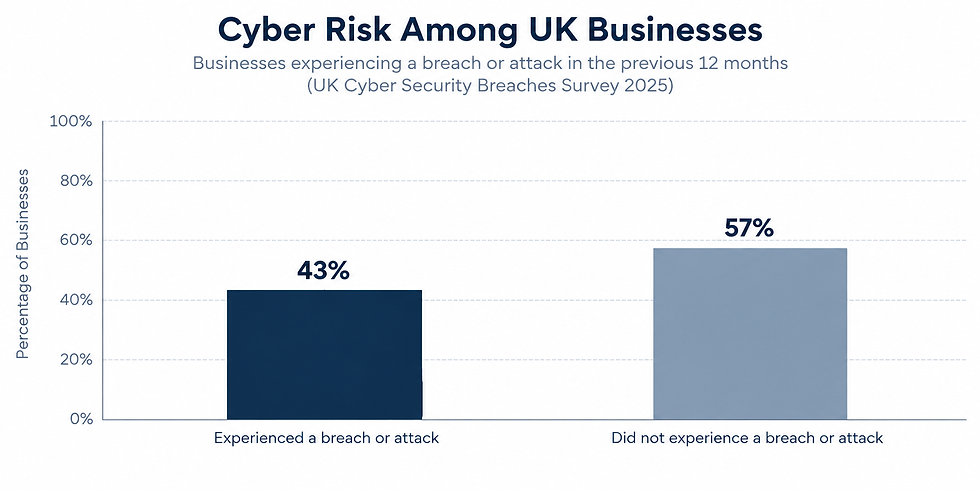
Cyber risk remains a constant pressure on UK organisations. The UK Government's Cyber Security Breaches Survey 2025 found that 43% of businesses experienced a cyber breach or attack in the previous 12 months.
For financial services firms, the stakes are higher still. Regulators now expect firms to prove they can withstand and recover from disruption, not simply respond to it.
Under PS21/3, firms had to operate within impact tolerances for important business services by 31 March 2025.
The Digital Operational Resilience Act has applied across the EU since 17 January 2025. It can affect UK firms with EU-regulated entities or those providing ICT services to EU financial firms.
The UK's critical third parties regime, in force since January 2025, signals growing regulatory scrutiny of the technology suppliers that firms rely on.
Reactive, break-fix support is no longer enough. Your MSP is now part of your resilience framework.
The MSP selection checklist
Use the questions below in every pitch meeting and contract review. A strong provider will answer each one with evidence, not promises.
1. Contracted SLAs and responsive support
When systems fail, every minute counts. Response and resolution times should be written into the contract, not just promised in a sales meeting.
Are response and resolution times defined for each priority level?
Is support available 24/7, including out-of-hours escalation?
What happens, and what do you receive, if an SLA is missed?
2. Dedicated account care
Some large providers treat clients as ticket numbers. Look for a partner whose senior leadership stays involved in your account.
Will you have a named account manager?
Can you escalate directly to senior leadership or founders?
How often will they hold formal service reviews with you?
3. Full ownership of your environment
Avoid vendors that rely on proprietary configurations or withhold credentials. Your firm should retain control over its infrastructure at all times.
Are all admin credentials and licences held in your firm's name?
Is your environment fully documented and shared with you?
Does the provider use standard, non-proprietary tooling?
4. Regulatory and compliance readiness
A provider supporting regulated firms must understand your obligations and provide evidence of its own compliance controls.
Do they have experience supporting FCA-regulated businesses?
Can they provide audit-ready documentation and incident reporting?
Can they evidence their controls for your third-party risk assessments?
5. Proactive security and a technology roadmap
A quality provider prevents incidents rather than reacting to them, and plans your infrastructure around your growth.
How often do they test backups and disaster recovery, and do they share the results?
What proactive threat monitoring and protection is included?
Will they maintain a technology roadmap aligned to your business goals?
6. Transparent contracts and pricing
Hidden charges and surprise fees erode trust quickly. Contracts should set out services, commitments and costs in plain language.
Is every service and cost itemised upfront?
Are price increases capped or tied to a defined review process?
Can they share references from comparable regulated clients?
7. A documented exit plan
Regulators expect firms to plan for leaving a critical supplier. A good MSP makes that straightforward.
Are notice periods and exit terms reasonable and written down?
Will they support a structured handover to a new provider?
Will all data, documentation and credentials be returned on exit?
Checklist at a glance
Evaluation factor | What to look for |
Service quality | Contracted SLAs, 24/7 cover, defined escalation |
Account care | Named account manager, senior access, regular service reviews |
Infrastructure | Full client ownership of credentials and documentation |
Compliance | FCA-regulated client experience, audit-ready documentation, incident reporting and evidence of third-party risk controls |
Security | Proactive threat protection and tested recovery plans |
Financial terms | Itemised pricing, capped increases, regulated client references |
Exit | Written exit terms, structured handover, full data return |
Securing your business growth with the right MSP
Choosing the right MSP means weighing response speed, contract transparency, security and regulatory readiness together. A partner that offers dedicated support, full infrastructure ownership and a documented exit plan protects your operations from costly disruption and supports steady growth.
Ready for IT support built for regulated firms? Book a strategic consultation with Alternit One to see how our managed services strengthen your resilience.